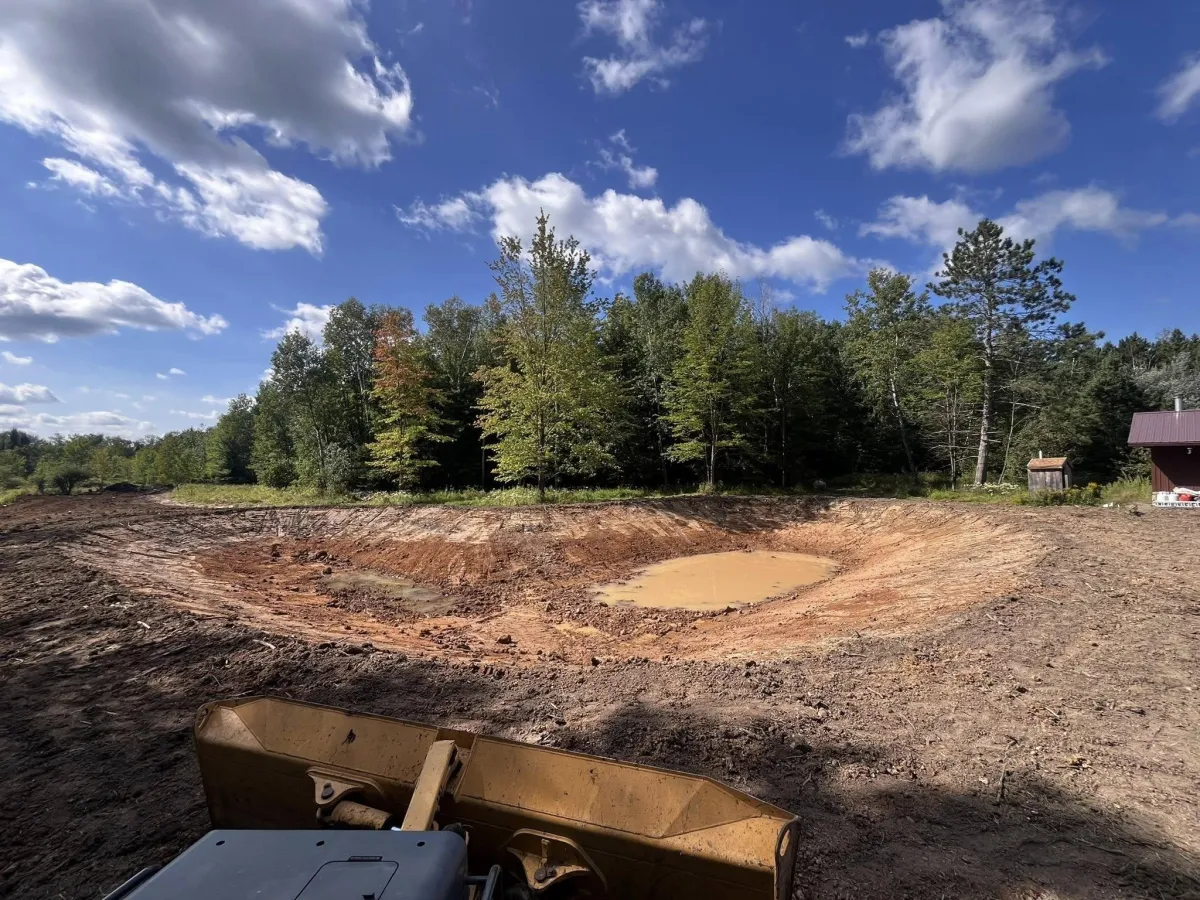
The Making of a Great Pond
Driving through Central Wisconsin, you see plenty of ponds. Some are beautiful, clear bodies of water teeming with bluegill and bass. Others are stagnant, half-empty mud pits covered in algae.
The difference usually isn’t luck—it’s excavation.
At A&C Excavating, we tell landowners all the time: A pond is not just a hole in the ground. It is a complex earth structure that has to interact with the water table, surface runoff, and soil composition. If you want a pond that holds water and adds value to your property, here is what actually goes into making a great one.

1. It Starts with the Soil
Before a single bucket of dirt is moved, we need to know what is happening underground. The most critical factor in pond construction is clay.
If your site is mostly sand or gravel, water will seep out as fast as it flows in. A great pond needs a heavy clay base to seal the bottom. If the natural clay isn't there, we have to import it to build a "clay liner," compacting it in layers to create a watertight seal. Without that compaction, you’re just digging a dry basin.
2. Depth Matters (Especially in Wisconsin)
In our climate, depth isn't just about volume; it’s about survival. If you plan to stock fish, you need enough depth to prevent "winter kill."
When ice forms on top, it cuts off oxygen exchange. If the pond is too shallow, the oxygen runs out, and your fish die before spring. A great pond typically needs a section that is at least 12 to 15 feet deep to ensure a safe winter haven for aquatic life. Conversely, you also need shallow "shelves" around the edges for spawning fish and to prevent steep drop-offs that are dangerous for swimmers.
3. The "Core Trench"
This is the part of the pond you will never see, but it is the most important part of the dam. We dig a trench along the center line of the dam down to the impervious subsoil and pack it full of high-quality clay. This "core" acts as a barrier, preventing water from seeping through the dam and causing a blowout. A dam without a core trench is a ticking time bomb.
4. managing the Overflow
Water always wins. When we get a heavy spring melt or a massive thunderstorm, that water needs a place to go. If you don't give it a path, it will make its own—usually by washing out your expensive new dam.
A great pond includes a properly sized emergency spillway. This is a designated channel, usually reinforced with rock or grass, that allows excess water to bypass the dam safely without eroding the earthwork.
5. Build It Right the First Time
Fixing a leaking pond is twice as expensive as digging it right the first time. It requires draining, drying, and re-excavating. If you are thinking about adding a pond to your property, call a contractor who understands the geology, not just someone with a backhoe.

