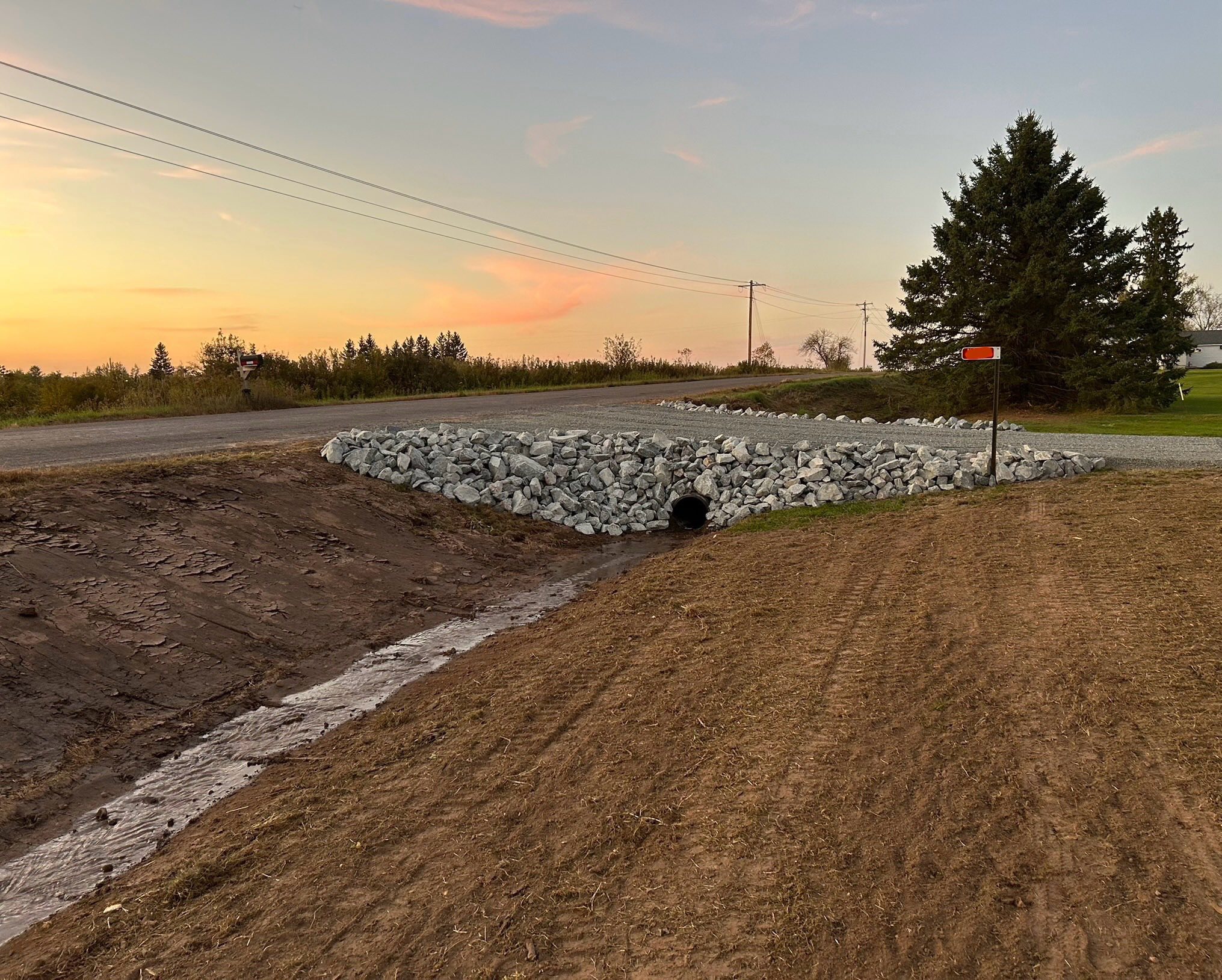
The Benefits of Proper Driveway Grading
Excavation, Gravel Driveways, Drainage, Central Wisconsin
Why Gravel Driveways Fail in Wisconsin Storms — And How Proper Excavation Fixes Them for Good
For many Central Wisconsin property owners, late-summer thunderstorms and fall downpours bring the same headache: rutted, washed-out gravel driveways. Understanding why this happens — and how proper excavation, drainage, and base construction solve it — is the key to a long-lasting, low-maintenance drive.
Why Rural Gravel Driveways Wash Out, Rut, and Fail in Storms
In late summer and fall, Central Wisconsin often sees heavy cloudbursts and torrential downpours. When several inches of rain fall in a short time, poorly built gravel driveways simply cannot handle the water. Instead of draining off, water runs straight down the tire tracks, turning them into channels that cut deeper with every storm and every vehicle pass.
The problem is usually not the gravel itself — it is the lack of structure and drainage underneath. Common issues include:
A flat or dished surface that lets water sit and pond instead of shedding off.
No side ditches, so stormwater has nowhere to go but down the driveway itself.
Thin gravel laid over soft Central Wisconsin clay that turns slick and unstable when saturated.
Central Wisconsin Clay: How Subsoil and Ponding Destroy Gravel Drives
Much of the Medford, Wausau, Merrill, and Marshfield area sits on dense clay subsoil. Clay holds water like a sponge. When rain from late-summer thunderstorms or fall storms soaks through the gravel and ponds on top of this clay, the subgrade softens and pumps under vehicle tires. Each pass pushes the rock down and squeezes muddy water up, quickly creating deep ruts and potholes.
Where the driveway is even slightly low, water ponds. That standing water loosens the fines in the gravel, floats them away, and leaves behind larger rock that no longer locks together. The result is a loose, uneven surface that washes away easily in the next storm. Without proper excavation and drainage, simply adding more gravel just feeds the problem.
Why “Just Dumping Gravel” on a Flat Driveway Fails Every Time
Many Wisconsin property owners try the quick fix: call the quarry, spread a few loads of gravel, and hope for the best. The mechanics of dirt work explain why this rarely works. A flat driveway surface gives water no reason to leave. During torrential downpours, water runs straight across and through that loose gravel, picking up fines and carrying them downhill. The material you paid for literally washes into the ditch or yard.
Without compaction and a layered base, traffic adds to the damage. Tires concentrate weight in narrow strips, pushing rock into the soft spots and forming ruts. Those ruts then capture more water in every storm, deepening with each rain and each trip in or out. The only lasting solution is to reshape the driveway and control the water, not just add more stone.
Crowning: Building the Right Shape for Storm Runoff
A properly built gravel driveway in Central Wisconsin is never flat. It has a center crown so water sheds quickly during heavy cloudbursts. A good rule of thumb is about 1/2 inch of slope per foot from the centerline to each edge. On a 12-foot-wide driveway, that means the center is roughly 3 inches higher than the shoulders. This gentle shape is enough to move stormwater off the driving surface without feeling like a hump under your tires.
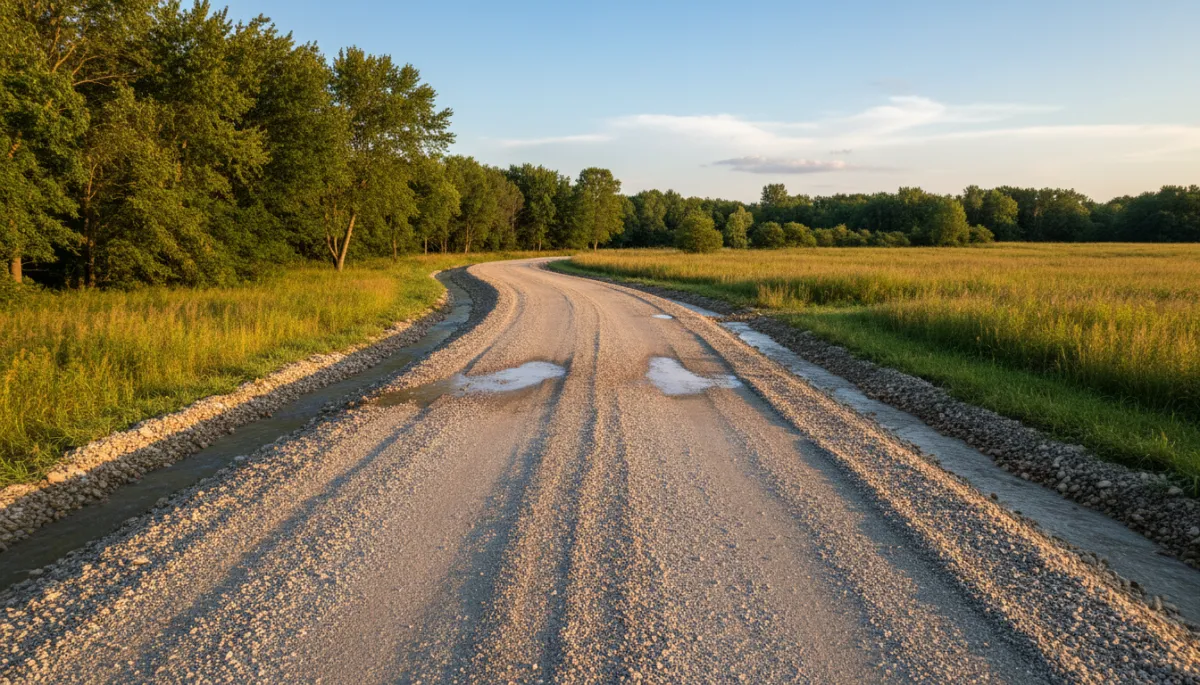
A well-defined crown keeps stormwater off the wheel tracks and into the ditches.
Ditching and Culverts: Giving Water a Safe Path Away
Crowning only works if the water has somewhere to go. That is where ditch cutting and culvert installation come in. Shallow side ditches along the driveway collect runoff from the crown and carry it parallel to the drive instead of straight down it. Where water needs to cross under the driveway — for example, from a field or woods on one side to a low spot on the other — a culvert is essential to prevent washouts.
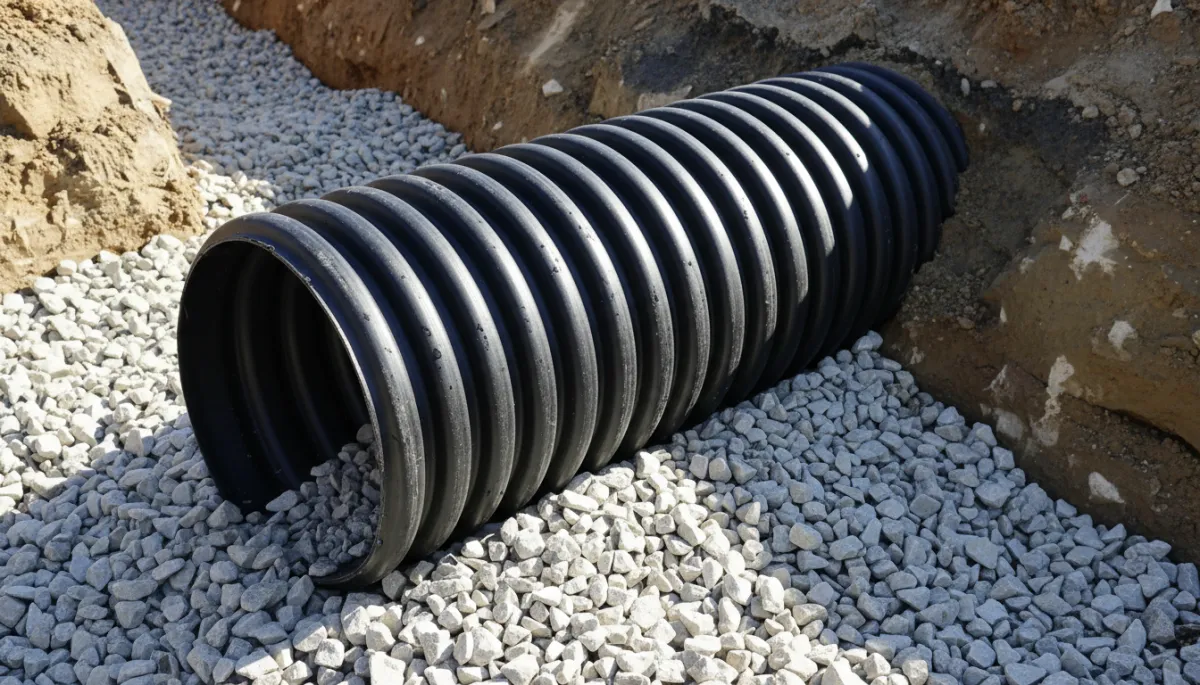
Proper culvert bedding in clean stone prevents pipe settlement and washouts during floods.
Proper culvert bedding is critical. The pipe should sit in clean, compacted aggregate, not directly on soft clay. Stone bedding supports the entire length of the culvert, spreads the load from vehicles, and lets water flow around the pipe instead of undermining it. When this is done correctly, even intense fall downpours can pass through without eroding the driveway above.
Multi-Layer Aggregate Bases and Compaction: Building a Solid Foundation
Long-lasting gravel driveways are built from the ground up. After shaping the subgrade and establishing ditches and culverts, an experienced contractor installs a multi-layer aggregate base. Typically, this starts with a coarser crushed rock layer to bridge over clay and provide drainage, followed by one or more layers of finer gravel for a smooth, tight surface.
Each layer must be compacted before the next one is added. Compaction locks the rock together, squeezes out air pockets, and creates a dense, stable structure that resists rutting from traffic. When built this way, the driveway can carry cars, pickups, and even delivery trucks through storm seasons without deforming.
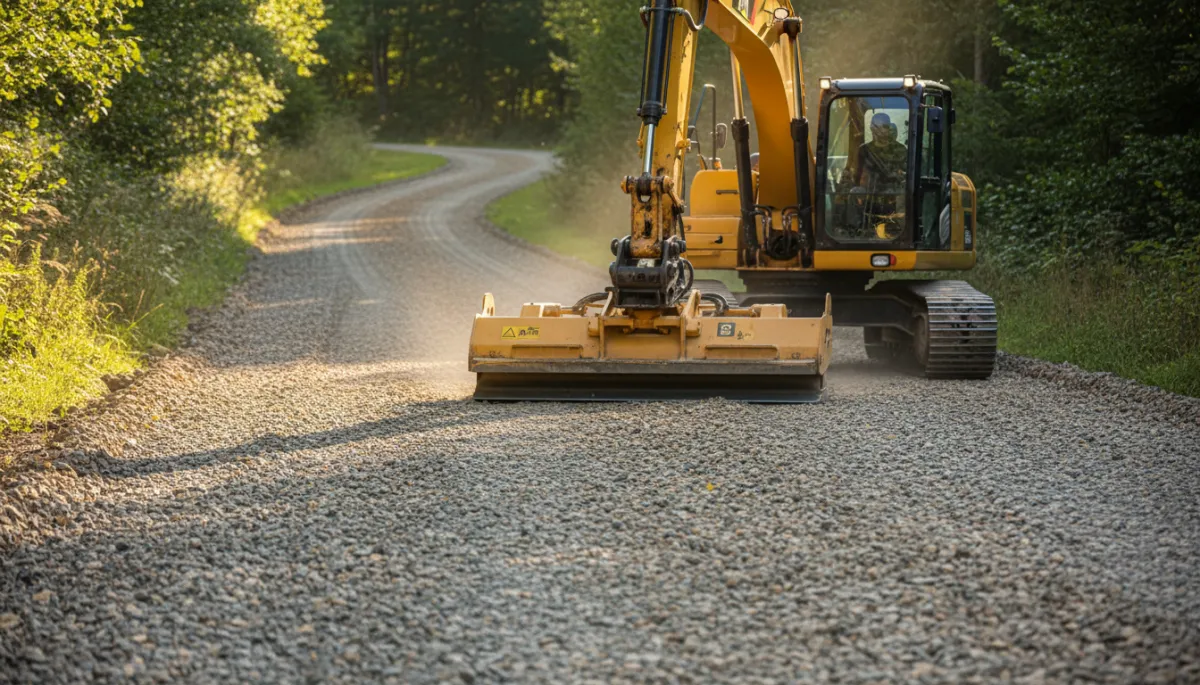
Layered, compacted aggregate bases provide strength that stands up to traffic and storms.
Why Late Summer Is the Ideal Dry Window for Driveway Repairs
For Wisconsin property owners, late summer typically offers a valuable dry window between spring mud season and the heaviest fall rains. Drier conditions make it easier to excavate soft spots, cut clean ditches, install culverts, and properly compact each aggregate layer. Working in this window means your rebuilt driveway is ready to handle the next round of fall downpours instead of failing in the first big storm.
A&C Excavating Equipment: Rebuilding Gravel Driveways Across Central Wisconsin
A&C Excavating Equipment specializes in rebuilding rural gravel driveways the right way for property owners in Medford, Wausau, Merrill, Marshfield, and the greater Central Wisconsin region. Our services include:
Complete driveway rebuilding and reshaping with proper crowning.
Ditch cutting and grading to move stormwater safely off the drive.
Culvert installation with correct bedding to prevent washouts.
Multi-layer aggregate base installation and professional compaction.
Instead of fighting the same ruts and washouts every year, you can have a driveway designed to work with Wisconsin weather, not against it.
Take Advantage of the Dry Weather: Fix Drainage Before Fall Rains
If your rural gravel driveway shows ruts, standing water, or washouts after storms, now is the time to act. Use this late-summer dry window to correct drainage, rebuild the base, and add proper crowning, ditching, and culverts before fall’s heavy rains arrive. You will save money in the long run and gain a smoother, safer drive for every season.
Contact A&C Excavating Equipment today for a free estimate on driveway rebuilding, ditch cutting, culvert installation, grading, and compaction anywhere in Central Wisconsin. A properly built gravel driveway is not just possible — with the right excavation work, it can be permanent.

